
Ever left your house and instantly panicked, wondering if you locked the door?
Or maybe you've had to dig through your bag for keys in the rain, or worse, lost them altogether?
If you’ve been in any of these situations, chances are you’ve started thinking about upgrading your old door lock. But the question is, are smart locks really better than regular locks?
Let’s break it down and help you decide what's right for your home.
What Exactly Is a Smart Lock?
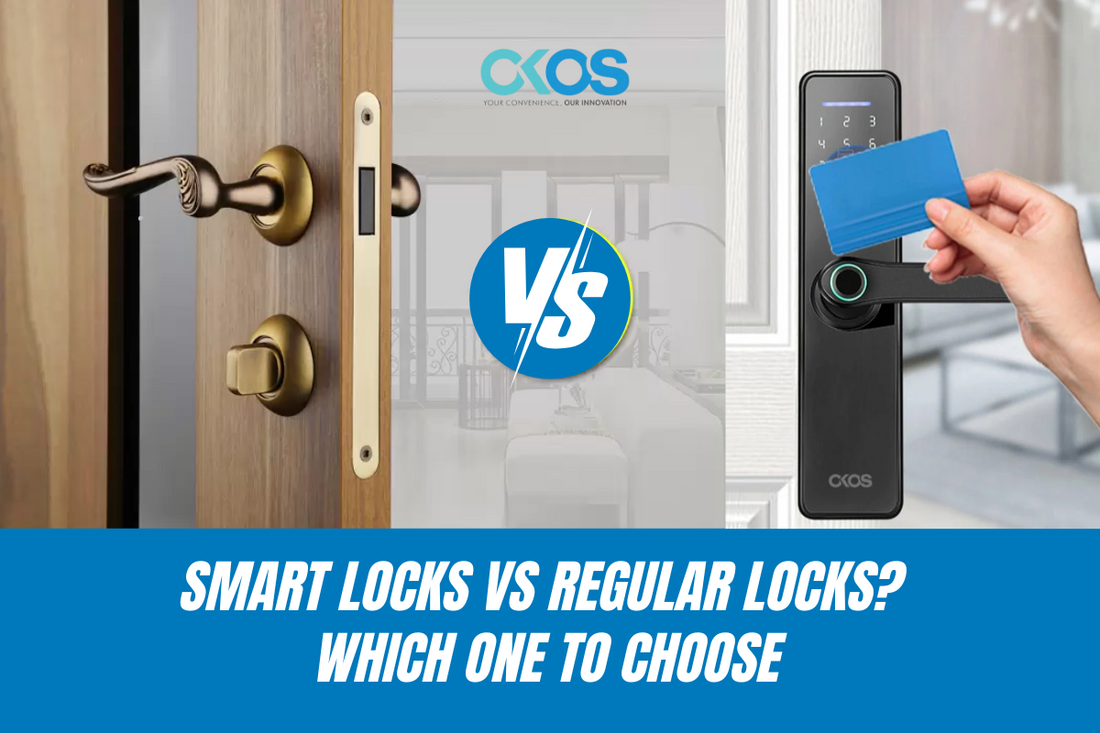
A smart lock is a modern locking system that lets you control your door using your phone, fingerprint, PIN, or even voice. No more physical keys. You can lock or unlock your door remotely, set temporary access for guests, or get alerts if someone tries to tamper with it.
It works best when connected to a home security system (especially one like OKOS), which gives you a full picture of your home’s safety—even when you’re away.
And What’s a Regular Lock?
A regular lock (also known as a traditional or mechanical lock) is what most homes still use. It requires a physical key to open or close the door. It’s simple, widely available, and inexpensive.
While familiar and easy to use, it has its limits. Keys can be lost, duplicated, or even broken. There's no way to track who accessed the door or when.
Smart Locks vs Regular Locks: What’s the Real Difference?
Let’s keep it simple and highlight the key areas:
| Feature | Smart Locks | Regular Locks |
|---|---|---|
| Access Method | App, fingerprint, PIN, voice | Physical key |
| Remote Access | Yes | No |
| Guest Access | Temporary codes or app-based access | Must hand over a key |
| Monitoring | Real-time notifications & access logs | Not possible |
| Security Level | Encrypted, customizable | Depends on key type |
| Power Source | Battery operated | Mechanical |
| Installation | Slightly complex, usually one-time | Simple |
Pros and Cons of Smart Locks
Pros:
-
Keyless convenience, no more hiding spare keys
-
Control from anywhere using your phone
-
Assign limited-time access to guests, cleaners, or deliveries
-
Get alerts if someone tampers with your lock
-
Works with other smart devices like lights and cameras
Cons:
-
Slightly higher upfront cost
-
Requires battery or Wi-Fi
-
Needs setup and app familiarity
Pros and Cons of Traditional Locks
Pros:
-
Budget-friendly and widely available
-
Easy to install and use
-
No power or internet needed
Cons:
-
Keys can be lost, copied, or stolen
-
No remote access or monitoring
-
No flexibility for guest access
Not Sure Which to Pick? Ask Yourself These:
-
Do you travel often or want to monitor your home remotely?
-
Do you have guests, workers, or deliveries coming when you’re not home?
-
Are you planning to upgrade other parts of your house to smart technology?
If yes, a smart lock is definitely worth considering.
If you live in a low-traffic area, rarely leave the house, or just need something basic, a regular lock may still do the job.
Smart Lock vs Electronic Lock: Are They Different?
An electronic lock is a digital lock (like a keypad or RFID card) that doesn’t always connect to your smartphone or the internet.On the other hand, a smart lock is internet-enabled and integrates with your smart home system for added control and features.
Conclusion
Smart locks vs regular locks, it’s not a one-size-fits-all answer. But if convenience, control, and peace of mind matter to you, the smart option is hard to beat.
Want to see how a smart lock fits into your home setup?
Explore OKOS’s complete range of smart entry solutions and get started on your smarter, safer home today.
FAQs
What’s the biggest benefit of a smart lock?
Hands-down, remote access and control. No more rushing home to unlock a door.
Is a smart lock secure?
Yes. When installed and managed properly, smart locks use strong encryption and are often more secure than keys that can be duplicated.
Will a smart lock work without the internet?
Some models do. Many allow you to use fingerprints or PINs even if the Wi-Fi is down.
Can I install it myself?
Yes, many smart locks are DIY-friendly, but professional installation ensures it’s fully integrated with your home automation system.